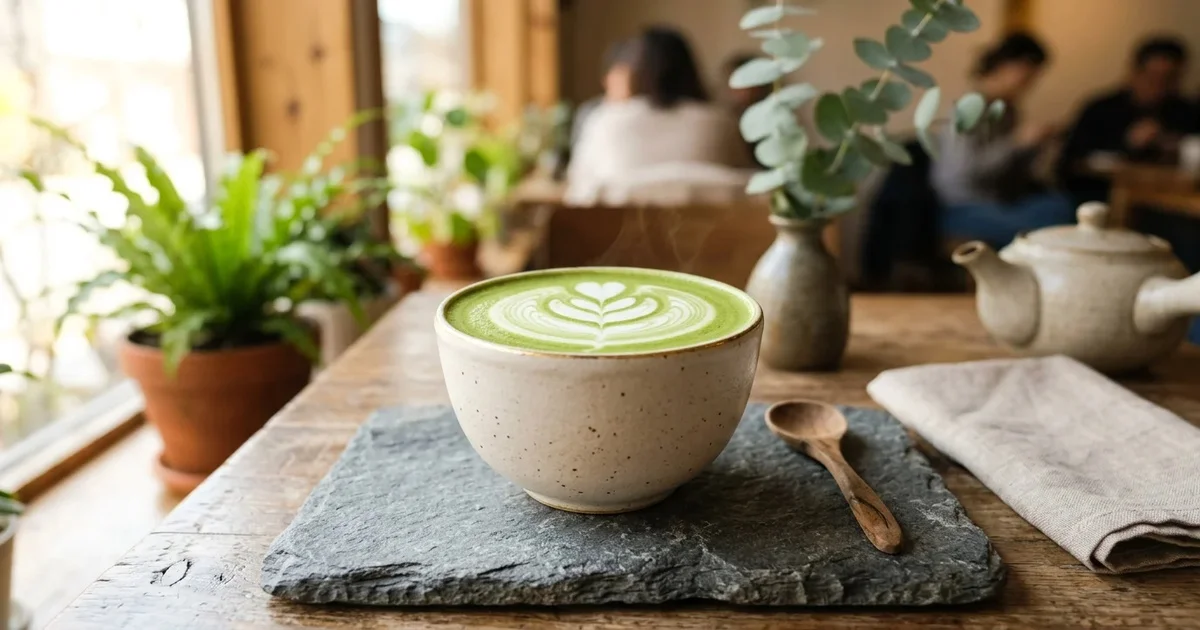
How to Make Matcha Latte: An Easy Matcha Latte Recipe
You want a creamy, frothy matcha latte at home. It is easier than you think. Learning how to make matcha latte is one of the best kitchen skills to pick up. This guide covers everything, from the hot version to the iced version, from beginner tools to cafe-level technique.
Think of it as your go-to for a creamy latte drink that gives whipped coffee and dalgona coffee a real run for their money. You will also get the full breakdown on Starbucks matcha latte nutrition and a Dunkin style copycat recipe. By the end, you will never need to overpay at a coffee shop again. Explore more flavors on flavorsuggest.co.
How to Make Matcha Latte (Core Method)
Simple Hot Matcha Latte Recipe (Step-by-Step)
You need just four things to start: matcha powder, warm water at 80°C (176°F), milk of choice and a sweetener. This easy recipe takes under five minutes. Here are the instructions and recipe ingredients in order.
- Sift 1 to 2 teaspoons of matcha powder through a fine mesh sieve into your chawan bowl or mug.
- Add 100 ml of 80°C water. Using boiling water burns the matcha and ruins the earthy flavor.
- Whisk in an M shape or M motion until you get a smooth mixture with no clumps at all.
- Heat 150 ml of milk in a saucepan. Froth it using a handheld frother or bamboo whisk.
- Pour the hot milk slowly over your matcha mixture.
- Add your sweetener of choice. Stir gently and serve.
That is how to make matcha latte in its simplest, most reliable form. For serving, pour into a warm mug and enjoy right away. Simple, quick and genuinely good.
Matcha to Milk Ratio for Perfect Taste
The ratio matters more than most people realize. Use 1 teaspoon of matcha powder per 150 ml of milk for a balanced latte. If you go beyond 150 ml of milk, the matcha flavor gets buried under a heavy milk taste.
For a stronger taste, keep your milk limit at 100 ml. For a milder version, stretch it to 200 ml but bump up the matcha to 1.5 teaspoons. Getting this balance right is the difference between a refreshing beverage and a bland cup.
Whisking vs No-Whisk Method
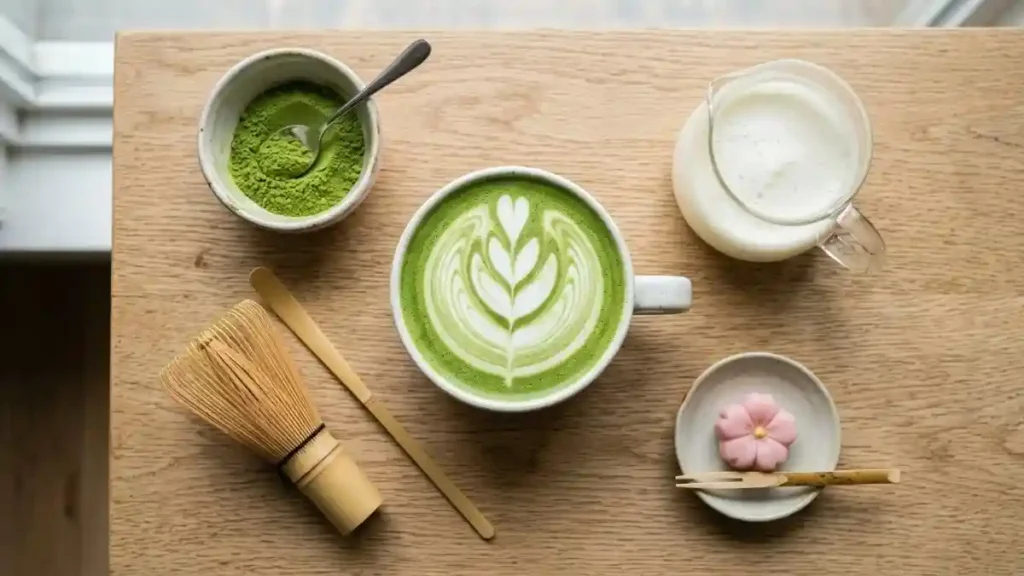
The bamboo whisk is the classic tool and a minor arm workout if you do it properly. It creates oxygenation in the matcha, giving you a frothy, smooth texture. The M motion or M shape technique is key do not use circular strokes.
No bamboo whisk? Use a mason jar. Add matcha powder and warm water, seal the lid and use the jar shaking method. Shake hard for 20 to 30 seconds. You get a decent smooth blend without any equipment investment. A handheld frother or immersion blending tool also works well. The frothing method using a handheld frother is the fastest option for daily use.
Common Mistakes That Ruin Texture and Flavor
Water too hot: Anything above 80°C brings out bitter, astringent notes. Keep it at 176°F.
Skipping the sift: Matcha clumps fast. Always use a fine mesh sieve before whisking.
Too much milk: Exceeding 150 ml of milk dilutes the earthy flavor completely.
Wrong grade of matcha: Culinary grade matcha can taste vegetable-like or wheat grass-like in a latte. Ceremonial grade gives a mellow, slightly sweet flavor instead.
How to Make Iced Matcha Latte
Knowing how to make matcha latte in cold form is a separate skill from the hot version. The dissolving step is the key difference.
Quick Iced Matcha Latte Method
The iced version is even faster. Quick preparation here means under three minutes total. The full latte preparation and beverage assembly is just dissolve, pou and top. Start by dissolving your matcha powder in 100 ml of warm water first. Do not pour matcha directly into cold milk it will not dissolve and you end up with clumps at the bottom.
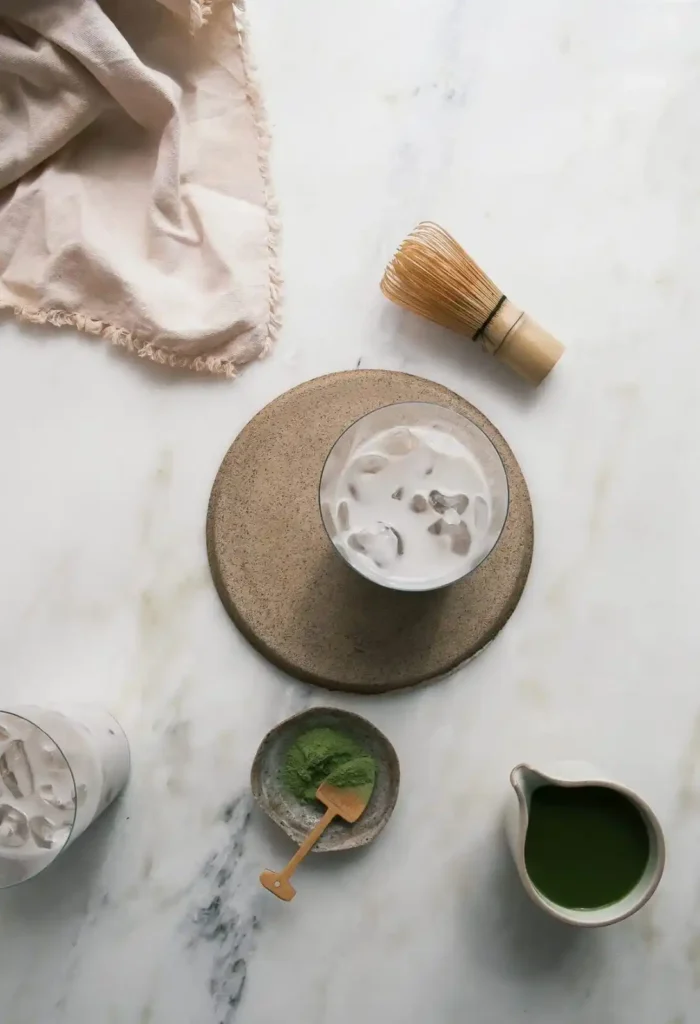
Once dissolved, let the mixture cool slightly. Then pour over ice cubes in a tall glass. Top with cold milk of choice. Add sweetener and stir.
Shaken vs Stirred Preparation
The shake method wins for texture. Pour the dissolved matcha and milk into a mason jar with ice. Seal the lid and shake hard. This mimics café-style preparation and creates a creamier, frothier drink.
Stirred preparation is simpler but produces less foam. You still get a good chilled drink, just without the layered effect. For aesthetics, shaken wins every time.
Best Ice to Liquid Balance
Use roughly equal parts ice and liquid for a refreshing cold beverage. Too much ice waters it down fast. Too little and it is not cold enough to feel like a proper iced drink. Around 1 cup of ice cubes to 200 ml of total liquid is a reliable starting point.
How to Avoid Clumps in Cold Matcha
Always dissolve matcha in warm water first. Even 80°C water and 30 seconds of whisking is enough. Never pour matcha powder directly into cold milk. That is the number one reason people end up with clumps.
Sifting through a fine mesh sieve before whisking also removes any pre-existing lumps in the powder.
Iced Matcha Latte Recipe (Detailed Version)
Traditional Cafe Style Recipe
Here is a proper step-by-step for a café-quality iced matcha latte at home.
Ingredients:
- 1.5 teaspoons ceremonial grade matcha powder.
- 100 ml water at 80°C.
- 150 ml oat milk or whole milk.
- 1 to 2 teaspoons honey or maple syrup.
- Ice cubes.
Steps:
- Sift matcha into a bowl.
- Add warm water. Whisk in M motion until smooth paste forms.
- Fill a glass with ice cubes.
- Pour the dissolved matcha over the ice.
- Slowly pour cold milk over the top for a layered iced matcha look.
- Add sweetener and stir gently before drinking.
This is the method used at most coffee shops. You can get the same result at home for a fraction of the price.
Strong vs Mild Flavor Adjustments
For a stronger, more earthy flavor: use 2 teaspoons of matcha and reduce milk to 100 ml. The rich flavor comes through much more clearly with less milk. Keep the sweetener low so the savory notes come through.
For a milder, sweeter cup: use 1 teaspoon of matcha and 200 ml of plant-based milk. Oat milk creates a creamy texture that rivals any café version. Add vanilla syrup or simple syrup to soften the taste balance. Oat milk naturally adds sweetness, so you may need less added sugar.
Milk Layering Technique for Smoothness
The milk sink effect is what creates the layered effect in iced drinks. Pour milk slowly over the back of a spoon held just above the ice. This lets the milk sink under the matcha layer gradually. The result is that beautiful pale green to white gradient you see in café cups. Do not stir until you are ready to drink.
What is a Matcha Latte
A matcha latte is a drink made from whisked green tea powder blended with steamed or cold milk. It is a tea latte not a coffee drink. It tastes earthy, slightly sweet and creamy. It is a popular coffee alternative for people who want natural caffeine without the coffee jitters.
You will find it at almost every coffee shop now, from local cafes to Starbucks. But the homemade version gives you full control over ingredients and sweetness.
Ingredients Breakdown (Matcha, Milk, Sweetener)
- Matcha powder: The core ingredient. Quality matcha is a bright green powder, not dull or yellowish.
- Milk: Dairy or non-dairy both work. Whole milk gives richness. Oat milk, soy milk, almond milk and macadamia milk are all popular plant-based milk options. Lactose-free milk works too.
- Sweetener: Optional but common. Honey, maple syrup, brown sugar, granulated sugar, vanilla syrup or simple syrup all work well. Each changes the flavor slightly.
- Water: Warm water at 80°C is used to dissolve the matcha before adding milk.
Taste Profile and Caffeine Level
Matcha has an earthy flavor with savory notes and a mild sweetness when made well. Bad matcha tastes like wheat grass or a vegetable-like flavor. Good matcha is mellow and smooth with a calming aftertaste.
On caffeine: one matcha latte has roughly 70 mg of natural caffeine. That is about half of a standard coffee. You get an energy boost without the crash, thanks to L-theanine in the tea leaves. This is why matcha is such a popular coffee alternative.
Best Matcha Powder for Lattes
The matcha you pick directly affects how good your results will be when you learn how to make matcha latte at home.
Ceremonial vs Culinary Matcha
| Feature | Ceremonial Grade | Culinary Grade |
|---|---|---|
| Flavor | Mellow, smooth, slightly sweet | Stronger, more bitter |
| Color | Vivid bright green | Duller green |
| Best use | Lattes, drinking straight | Baking, cooking |
| Price | Higher (20–30 USD per 1.5–2.5 oz) | More affordable |
| Origin | Uji Japan, Fukuoka packaging | Varies |
For a matcha latte, ceremonial grade is always the better pick. The taste balance is far superior and the pistachio color of the finished drink looks far more appealing.
How to Identify Premium Quality Matcha
Real quality matcha has a vivid, bright green color almost a pistachio color. If it looks brownish or pale green, the quality matcha is not there. Premium quality matcha from Uji Japan or Fukuoka packaging will have a clean, fresh grassy smell.
T2 matcha is one well-known brand. Japanese matcha sourced with weekly sourcing and air-shipping tends to stay fresh and potent. Packaging in a 1.5 to 2.5 ounce package with proper sealing is a good sign.
Storage and Freshness Impact
Store matcha in an airtight container away from light and heat. Once opened, use it within two to three months. Old matcha oxidizes and loses its bright green powder color. It also starts tasting flat and bitter. The fridge can help slow oxidation, but make sure the container is fully sealed.
How to Make Matcha Latte at Home
Beginner-Friendly Home Recipe
Knowing how to make matcha latte at home means you never have to spend $6 at a coffee shop again. This is the simplest version with the best results.
- 1 teaspoon matcha powder.
- 100 ml warm water (80°C).
- 150 ml oat milk or whole milk.
- 1 teaspoon honey.
Sift the matcha. Whisk it in warm water until smooth. Heat your milk, gentle heating to around 65°C works best, then froth it. Pour the milk over the matcha. Sweeten and enjoy. You do not need any fancy equipment to start. A teaspoon and a regular whisk work fine.
Tools Needed (Whisk, Frother, Jar Method)
| Tool | Purpose | Skill Level |
|---|---|---|
| Bamboo whisk (chasen) | Traditional whisking, best foam | Intermediate |
| Handheld frother | Quick frothing for milk | Beginner |
| Mason jar | Shake method for iced drinks | Beginner |
| Blender | Full blended method for smooth drinks | Beginner |
| Fine mesh sieve | Sifting matcha | Everyone |
| Measuring cup | Accurate liquid ratios | Everyone |
| Bamboo scoop (chashaku) | Traditional matcha measuring | Optional |
| Chawan bowl | Traditional preparation | Optional |
Milk and Sweetener Variations
You have a lot of room to personalize this drink. Here are the best combinations based on taste:
- Oat milk + maple syrup = naturally sweet and creamy.
- Whole milk + honey = rich, classic, satisfying.
- Soy milk + brown sugar = full-bodied with caramel notes.
- Almond milk + vanilla syrup = light and fragrant.
- Macadamia milk + simple syrup = buttery and smooth.
Sweetener mixing difficulty is low; just add after pouring and stir. If you use unsweetened matcha with no sweetener at all, you get a more traditional, clean flavor. Keep in mind that sugar interaction with matcha is subtle, brown sugar adds depth while granulated sugar keeps flavors neutral.
Strawberry Matcha Latte
Once you know how to make matcha latte in the classic form, the strawberry version is just one extra step.
Strawberry Base Preparation
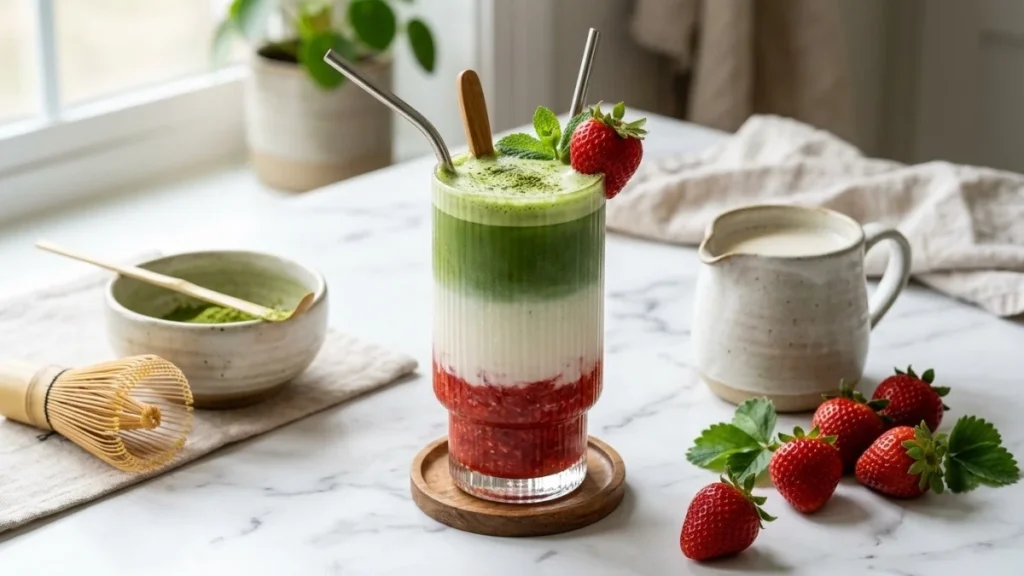
The strawberry matcha latte is a coffee shop favorite. To make the strawberry base at home, blend fresh fruit around 5 to 6 fresh strawberries with 1 tablespoon of granulated sugar and a squeeze of citric acid. Simmer in a saucepan on low heat for about 15 minutes until thick. Let it cool. You now have a homemade strawberry syrup without potassium sorbate or artificial preservatives.
Layering Technique for Aesthetic Drink
Pour the strawberry syrup into your glass first. Add ice cubes. Then slowly pour oat milk over the ice. Finally, pour the prepared matcha on top. The layering technique creates a striking red-to-green gradient. Do not stir until you are ready to drink, the layered effect is the whole point of the presentation.
Flavor Balance (Sweet vs Earthy Matcha)
The sweetness from the strawberry foam base needs to balance the earthy matcha. Use 1 teaspoon of matcha, not 2, the strawberry already adds a lot of flavor. If the matcha is too strong, it drowns the fruit. If the strawberry is too sweet, it masks the pleasant taste of the green tea. Aim for a 1:1 flavor ratio and adjust from there.
Dunkin Donuts Matcha Latte
Ingredients Breakdown of Dunkin Version
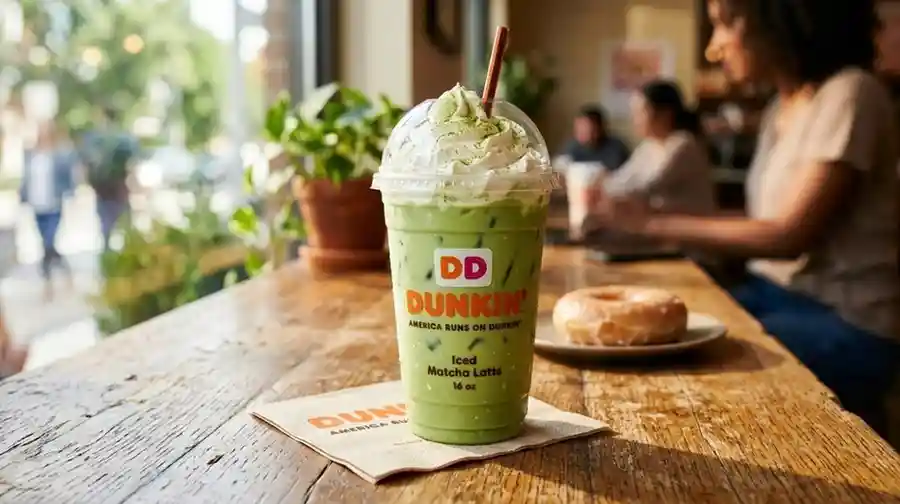
The Dunkin matcha latte uses a pre-sweetened matcha blend mixed with milk. It is not ceremonial grade matcha. The version from Dunkin style contains natural flavors, added sugar and allergens from dairy. It is a convenient latte drink but uses culinary-grade ingredients designed for speed, not quality.
Homemade Copycat Recipe
Making a Dunkin style matcha latte at home is straightforward. And honestly, knowing how to make matcha latte at this level means you can replicate any coffee shop version.
- 1.5 teaspoons culinary matcha or ceremonial grade matcha.
- 100 ml warm water.
- 200 ml whole milk or reduced fat milk.
- 2 teaspoons vanilla syrup or classic syrup.
- Ice cubes.
Dissolve matcha in warm water. Add vanilla syrup. Pour over ice. Top with cold milk. That is it. Your homemade version costs a fraction of the coffee shop price and tastes just as good actually better, because you control the quality matcha you use.
For a hot version, heat the milk, froth it and combine. You can find quality matcha for home preparation through Instacart or direct from suppliers.
Customization Options (Sweetness, Milk Type)
Dunkin offers beverage customization in store, but at home you go further:
- Reduce sweetness by cutting vanilla syrup to 1 teaspoon.
- Use oat milk for a creamier, dairy-free version.
- Add whipped cream on top for a richer experience.
- Try heavy cream instead of whole milk for an indulgent cup.
- Skip sweetener entirely for an unsweetened matcha version.
This level of personalization is what makes home preparation worth it. Your beverage choice, your rules.
Starbucks Matcha Latte Nutrition
Calories and Sugar Content
The Starbucks matcha latte is one of the higher-sugar drinks on their menu. Here is what a Grande (16 oz) with 2% milk contains:
| Nutrient | Amount |
|---|---|
| Calories | 240 |
| Fat | 6 g |
| Saturated fat | 4 g |
| Sodium | 140 mg |
| Carbohydrates | 34 g |
| Sugar (added) | 29 g |
| Protein | 11 g |
| Calcium | 25% DV |
| Vitamin D | 30% DV |
| Potassium | 10% DV |
To be clear on the numbers: fat 6 g, saturated fat 4 g, sodium 140 mg, carbs 34 g and sugar 29 g. For a latte drink, that is a significant nutrition load. Sugar 19 g of that is added sugar beyond natural milk sugars.
The sugar content at 29 g of added sugar exceeds the daily limit of 25 g for added sugar that health guidelines recommend. That means a single Starbucks matcha latte pushes you over your daily limit before you even eat anything. This makes the Starbucks version a high sugar drink if you have it daily.
Caffeine Comparison
Once you know how to make matcha latte yourself, you also control the caffeine level. Here is how it stacks up:
| Drink | Caffeine |
|---|---|
| Starbucks Matcha Latte (Grande) | ~80 mg |
| Homemade Matcha Latte | ~70 mg |
| Standard drip coffee | ~150–200 mg |
| Dunkin Matcha Latte | ~120 mg |
Matcha benefits go beyond caffeine. Matcha provides natural caffeine along with L-theanine, which gives a calming, steady energy boost rather than a stimulant spike. It is a genuine coffee alternative for this reason.
Store vs Homemade Health Differences
The Starbucks matcha blend contains sweetened matcha powder as its first ingredient. The sugar is baked into the mix before it ever reaches your cup. You cannot order it unsweetened in the traditional sense because the powder already has sugar in it.
At home, you control the sugar intake completely. You can use unsweetened matcha and add honey or maple syrup to taste. The nutrition label on store versions also includes allergens from dairy and natural flavors from their proprietary blend. Homemade versions let you choose dairy-free, lactose-free or reduced fat milk options based on your actual needs.
If you want the nutrients, calcium 25%, vitamin D 30%, potassium 10% without the added sugar, making it at home with whole milk or fortified plant-based milk gives you the same calcium and vitamin D benefit at roughly 180 calories instead of 240 and with less than 19 g added sugar if you control the sweetener. You still get protein 11 g worth of nutrition from the milk itself.
Once you have mastered how to make matcha latte at home, you open a door to a whole world of tea latte creativity. Check out more flavor-focused recipes and beverage guides at www.flavorsuggest.co . It covers everything from tea lattes to iced drink comparisons and beyond.
Frequently Asked Questions
What is the best milk for matcha latte?
Oat milk is the top choice for plant-based options. Whole milk gives the richest, creamiest texture for dairy lovers.
Is matcha latte an easy recipe for beginners?
Absolutely. You only need four recipe ingredients and five minutes. The hardest part is whisking without clumps.
Can you make a matcha latte without a whisk?
Yes. Use a mason jar with the jar shaking method or a handheld frother to dissolve and froth the matcha.
How much caffeine is in a homemade matcha latte?
A standard homemade matcha latte contains around 70 mg of natural caffeine per cup.
Is matcha latte good for energy?
Yes. The natural caffeine combined with L-theanine provides a steady energy boost without the jittery feeling from coffee.
What temperature should water be for matcha?
Use water at 80°C or 176°F. Boiling water makes matcha taste bitter and ruins the earthy flavor.
Why does my matcha latte have clumps?
You likely poured matcha directly into cold liquid. Always dissolve it in warm water and sift through a fine mesh sieve first.
Is Starbucks matcha latte healthy?
It has useful nutrients like calcium 25% and vitamin D 30%, but the sugar content at 29 g per Grande is high. A homemade version with less sweetener is a healthier daily choice.
What is ceremonial grade matcha?
It is the highest quality matcha, traditionally used for drinking. It has a bright green color, mellow taste and smooth texture ideal for lattes.
Can I use cold water to dissolve matcha?
Cold water does not dissolve matcha well. You will end up with clumps and an under-extracted flavor. Always use 80°C water.
What is a Starbucks copycat matcha latte?
It is a homemade version using ceremonial grade matcha, your milk of choice, vanilla syrup and ice made at home for a fraction of the cost.
Is matcha latte actually healthy?
Yes, it has various health benefits. It enhances cognitive function and strengthens cardiac muscles.
References
- USDA FoodData Central: fdc.nal.usda.gov
- National Institutes of Health: Caffeine and L-Theanine – nih.gov
- HeyTea Matcha Menu: https://heyteamenu.se