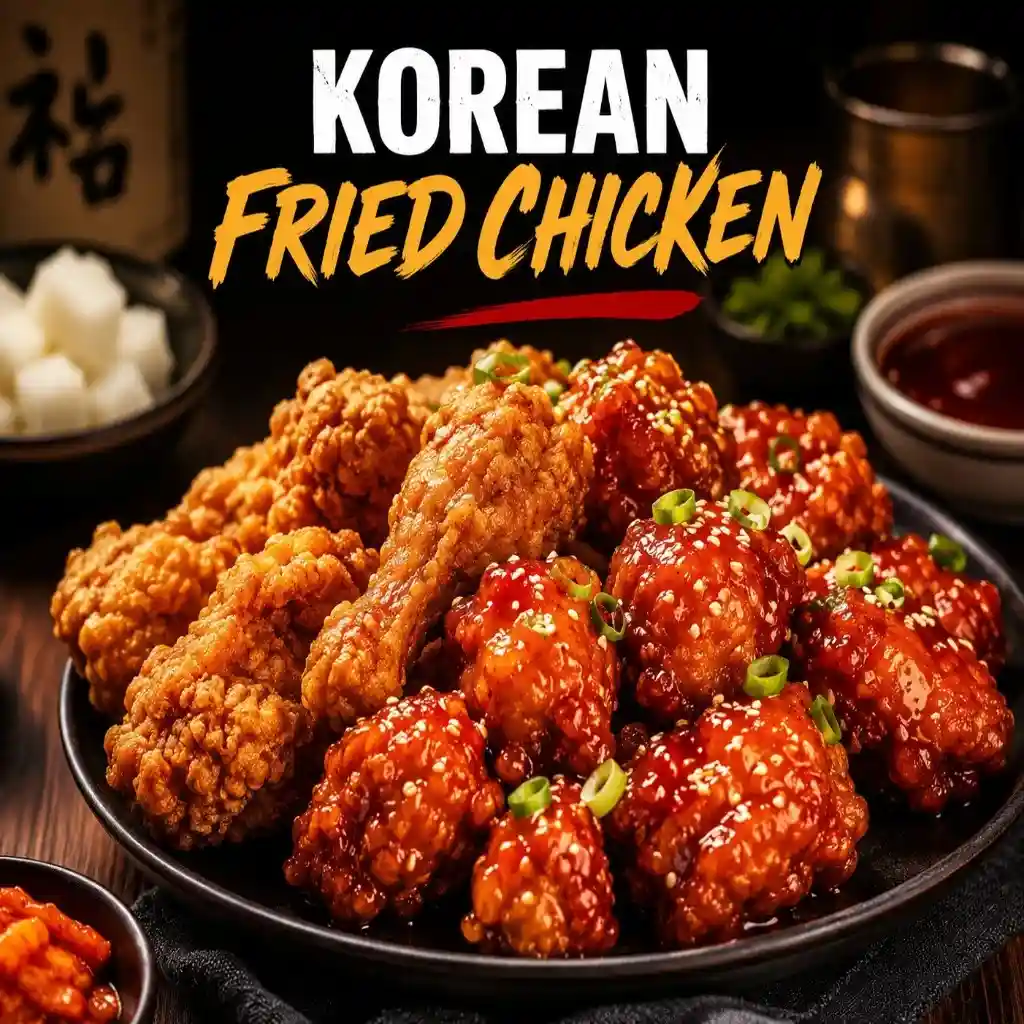
Korean Fried Chicken Flavor: A Guide to Ultra Crispy, Sweet & Spicy Authentic Style
You take your first bite of Korean fried chicken and your jaw meets something unexpected. The crust shatters in a single clean fracture. Not crumbles and no soft pieces. A sharp, glass-like crack. Then sweet heat rolls across your tongue. Then a slow, warm burn that stays with you for minutes. Your hand goes back for a second piece before your brain has finished processing the first.
We cover everything from yangnyeom to chimaek, from potato starch to the double-fry method. By the end, you will understand exactly why this dish has taken over menus at every Korean fried chicken restaurant from Seoul to your city. Find more flavors on the food flavor guide.
What is Korean Fried Chicken?
Korean fried chicken, known in Korean as chikin or 치킨, is a South Korean dish built entirely around one idea. That definition matters because every design choice flows from it. The coating exists to carry the sauce.
The dish differs from every Western style in one key way. It uses a thin, almost translucent batter made from potato starch or rice flour. Korean fried chicken takes the opposite approach to flavor from what American-style cooking does.
It gets fried twice. The result is an ultra-crispy, glass-thin crust that stays rigid even under a sticky, liquid sauce. That is what separates it from American-style fried chicken, Southern-style fried chicken and every other Western style you have tried.
The name of Korean fried chicken changes depending on the sauce. Sweet and spicy is yangnyeom. Soy garlic has its own loyal crowd. Each version is a different dish in terms of flavor, even though the double-fried chicken underneath is identical.
The origin of Korean fried chicken as a modern dish traces back to the 1970s and 1980s in South Korea, when American-style fast food influenced Korean cooking. Koreans took the concept and rebuilt it from scratch with local ingredients and techniques. By the 2010s it had spread worldwide and today you can find a Korean fried chicken restaurant in most major cities.
Why Korean Fried Chicken Gets So Crispy
Understanding this will make you a better cook and a smarter customer.
Potato Starch vs Wheat Flour
American-style fried chicken uses a thick flour-and-egg coating, sometimes soaked in buttermilk. That batter is dense, soft and golden. It tastes like bread. The seasoning lives inside the coating itself, with herbs, garlic powder, salt and eggs mixed directly in.
Korean fried chicken does the opposite. The batter is built from potato starch, not all-purpose flour. Potato starch behaves differently when it hits hot oil. It creates a rigid, glass-like shell instead of a soft, cakey one. The coating itself is almost flavorless. That is intentional. Its only job is to hold the crust shape and let the sauce do the talking.
Rice flour works in a similar way. Some recipes mix both. Either way, the result is a thinner, crisper, more delicate crust than wheat flour can produce.
The Double-Fry Method
The double-frying technique is the real secret behind the texture. It works in two stages.
The first fry happens at lower temperature, around 325 degrees Fahrenheit. This cooks the chicken interior fully without burning the surface. You pull it out and let it rest on a wire rack, not paper towels. Paper towels trap steam underneath the crust and soften it. A wire rack lets air circulation happen on all sides.
The second fry happens at higher heat, around 375 degrees Fahrenheit. This removes residual surface moisture and hardens the exterior into a rigid, brittle snap you feel in your jaw. The crust-to-sauce ratio improves because the surface is now dense enough to resist soaking.
The result is a piece of double-fried chicken that stays crispy longer than almost anything else you can fry. Even after you toss it in a thick, sticky sauce.
Every Korean Fried Chicken Sauce
The sauce is where this dish becomes personal. Different sauces produce completely different eating experiences even though the base is the same double-fried chicken underneath.
Yangnyeom (양념)
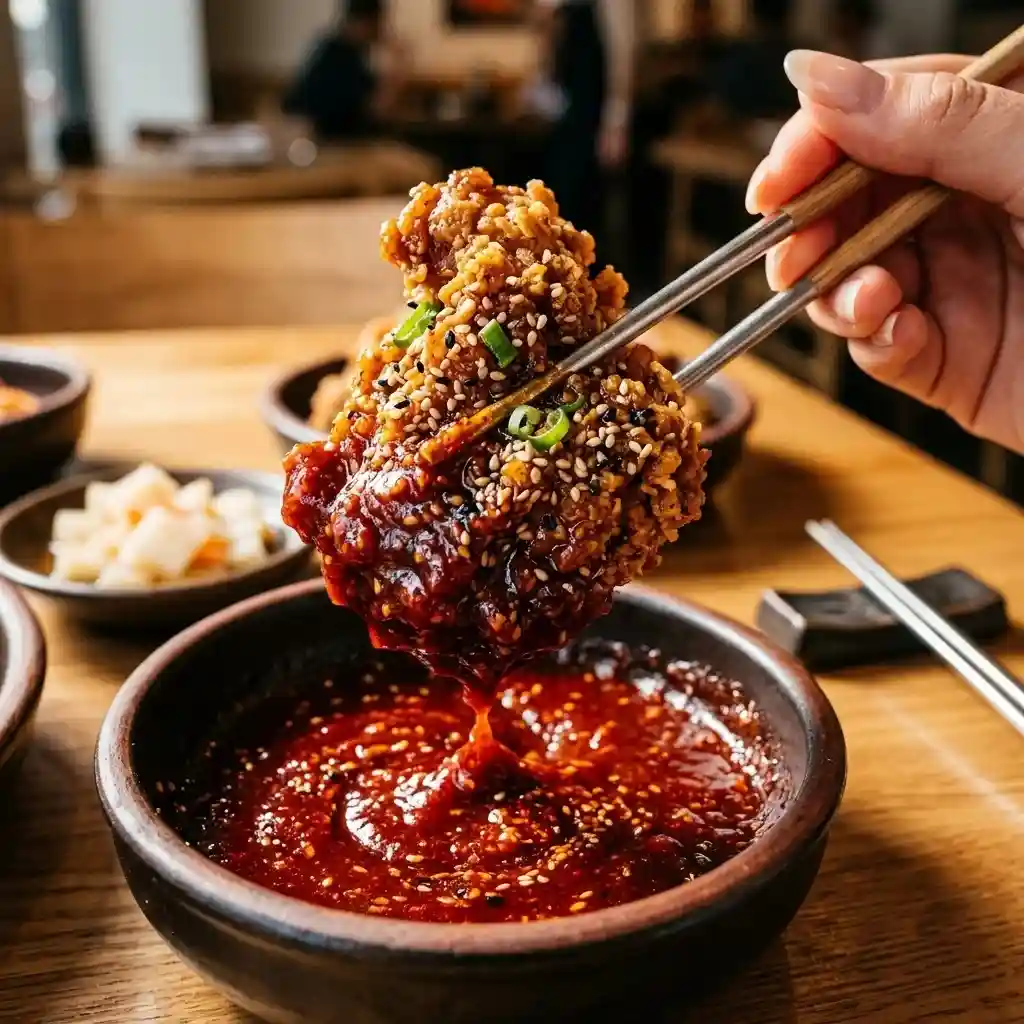
Yangnyeom is what most people mean when they say Korean fried chicken sauce. The base ingredients are gochujang (fermented Korean chili paste), ketchup, honey, brown sugar, soy sauce, fresh minced garlic and toasted sesame oil.
The flavor arrives in waves. First you get sweetness, almost candy-like on the front of your tongue. Then the gochujang heat builds slowly behind it. Then a savory garlic note moves to the back of your palate. Then a toasted sesame finish closes everything out.
When most people think of Korean fried chicken, this sauce is exactly what they are picturing. It is sticky and glossy. Every ridge of the crust gets coated. You get contrast between the parts that stayed dry and the parts the glaze soaked into. The ketchup reads as acidity rather than ketchup flavor. The richness from sesame oil gives the finish depth.
If you are searching Korean fried chicken near me for your first time, yangnyeom is the sauce to start with.
Soy Garlic
Soy garlic plays it quieter and cooler than yangnyeom. It is built from soy sauce, garlic, sugar and sometimes a small amount of butter or oyster sauce. The garlic is front and center, caramelized slightly from the heat of the sauce. The umami is deep. The salt balance is careful. A faint sweetness keeps it from tipping into pure savory territory.
This sauce converts people who think they do not like spicy food. The flavor is warm and deeply satisfying without any heat level to navigate.
Dakgangjeong (닭강정)
Dakgangjeong is technically an older, separate dish from what most people call Korean fried chicken. But you will find it on nearly every Korean fried chicken menu today. The recipe calls for whole dried chilies, vinegar, soy sauce and sugar cooked down together. The heat is sharper and more tangy than yangnyeom. Less sticky, more lacquered. That vinegar element slices through the fat and keeps your palate fresh between pieces.
Honey Butter
Honey butter took off during the Korean snack food craze of the 2010s and became its own cultural moment in South Korea. Sweet, buttery, no real heat. It is popular with kids and useful as a contrast piece when you order half-and-half. With this little heat, the crunchiness of the crust becomes the main event.
Plain (Naked)
Plain Korean fried chicken comes and a separate dipping sauce on the side rather than a glaze on top. A well-made piece of plain Korean fried chicken tastes clean, faintly savory and faintly rich from the fry. This version tells you whether the kitchen actually knows what it is doing. The crust and the fry carry everything on their own.
Sauce Comparison
| Sauce | Heat Level | Sweetness | Best For | Beginner Friendly |
|---|---|---|---|---|
| Yangnyeom | Medium-High | High | First-timers, sharers | Yes |
| Soy Garlic | None | Low-Medium | Spice-averse eaters | Yes |
| Dakgangjeong | Medium | Medium | Tangy flavor lovers | Moderate |
| Honey Butter | None | High | Kids, contrast orders | Yes |
| Plain (Naked) | None | None | Crust appreciators | Yes |
Which sauce should you order first? Start with the half-and-half split. Mix sauce styles when you order. Most Korean fried chicken restaurants offer half-and-half orders. On your first visit, split the order between soy garlic and yangnyeom. You get both flavor profiles at once and can decide which direction you want to go next time.
Korean vs American Fried Chicken
Here is how the two styles stack up when you place them side by side.
| Feature | Korean Fried Chicken | American Fried Chicken |
|---|---|---|
| Batter type | Thin potato starch or rice flour | Thick wheat flour, eggs, often buttermilk |
| Frying method | Double-fried (two rounds) | Typically single-fried |
| Crust texture | Glass-thin, shattery, rigid | Dense, bread-like, golden |
| Flavor strategy | Sauce is the main flavor vehicle | Seasoning built into the batter |
| Common sauces | Yangnyeom, soy garlic, honey butter, dakgangjeong | Buffalo, honey mustard, ranch served on the side |
| Sauce application | Tossed or hand-brushed onto finished crust | Dipped at the table by the eater |
| Heat level | Mild to spicy depending on sauce | Mild to extreme (Nashville hot style) |
| Typical cuts | Whole chicken, wings, boneless bites | All cuts including thighs, breasts, tenders |
| Serving context | Shared plates, often paired with beer | Individual meals, family buckets, fast food |
The biggest difference is direction. American fried chicken flavor comes from inside the coating. Korean fried chicken flavor comes from what gets painted on the outside.
You can also compare Korean fried chicken to Japanese karaage, which uses a lighter marinade-forward approach with smaller cuts and no glaze. Compare it to Nashville hot chicken, which uses the same single-fry method as American fried chicken but with a spiced oil finish instead of a fermented sauce.
Is Korean Fried Chicken Healthier Than American Fried Chicken?
Korean fried chicken is still fried food and it is calorie-dense. A yangnyeom serving runs roughly 600 to 700 calories depending on portion and sauce. Its thinner batter generally absorbs less oil than thick-battered American styles, making it slightly lighter overall. The sauces, especially sweet styles, can add significant sugar. So the answer depends on your portion size and sauce choice.
How to Make Korean Fried Chicken at Home
A good Korean fried chicken recipe is less about following steps and more about understanding what each step does to the flavor and texture. Here is a full recipe you can cook at home tonight.
Ingredients
For the chicken:
- Any chicken cut works here. Wings, drumsticks and boneless thighs all fry well.
- 2 tablespoons rice wine.
- 1 teaspoon grated fresh ginger.
- 1 teaspoon salt.
- Half teaspoon black pepper.
- Small pinch of garlic powder.
- Potato starch for coating.
- Neutral oil for frying (vegetable oil or rice bran oil).
For yangnyeom sauce:
- 2 tablespoons gochujang.
- 3 tablespoons ketchup.
- 3 tablespoons honey.
- 2 tablespoons brown sugar.
- 2 tablespoons soy sauce.
- 2 tablespoons minced garlic.
- 1 tablespoon sesame oil.
For soy garlic sauce (plain version):
- 3 tablespoons soy sauce.
- 1.5 tablespoons sugar.
- 1 tablespoon minced garlic.
- Half tablespoon butter.
Step 1: The Marinade
Place your chicken pieces in a bowl. Add 2 tablespoons rice wine, 1 teaspoon grated fresh ginger, 1 teaspoon salt, half a teaspoon black pepper and a small pinch of garlic powder. Mix well and let it rest for at least 30 minutes.
Rice wine softens the meat and strips away any gamey smell from the poultry. The ginger adds warmth you will not be able to name, but skipping it leaves a gap in the finish you will absolutely notice.
Step 2: The Coating
Grab your potato starch and coat each piece in a thin, even layer. Keep it light. Remove any clumps and shake off whatever does not cling naturally. A lighter coating produces a more delicate, more shattery crust every time. Do not use all-purpose flour here. It will not produce the same texture.
Step 3: The First Fry
Pour a generous amount of neutral oil into a deep saucepan and bring it to 325 degrees Fahrenheit. Use a frying thermometer to keep track. Work in small batches and fry for 4 to 5 minutes per batch. Crowding the pan drops the oil temperature or the oil temperature will drop and the crust will go soggy.
Transfer each batch to a wire rack to rest. The air circulation underneath keeps the bottom of your crust dry. Avoid paper towels here. They hold moisture against the crust and reverse your work.
Step 4: The Second Fry
Bring your oil up to 375 degrees Fahrenheit. Return the chicken in batches and fry for another 2 to 3 minutes until the exterior is deep gold and firm to the touch. Your internal temperature target is 165 degrees Fahrenheit (74 degrees Celsius) across every piece. The USDA FSIS sets 165 degrees as the safe minimum internal temperature for all poultry. An instant-read thermometer takes 5 seconds and gives you certainty. The CDC notes that roughly 1 million Americans get sick from contaminated poultry each year. It is worth the check.
Step 5: The Sauce
For yangnyeom, combine gochujang, ketchup, honey, brown sugar, soy sauce, minced garlic and sesame oil in a small pan over low heat. Keep stirring over low heat until you see the first few bubbles. Take it off the heat at that point. Coat your fried chicken pieces immediately and serve while everything is hot. A good yangnyeom application sticks to the crust surface. It should never collect at the bottom of the dish.
For the plain soy garlic version, simmer soy sauce, sugar, minced garlic and butter together until slightly thick. The result is a quieter, cleaner flavor that lets the crunch carry the eating experience.
Can I make Korean fried chicken without gochujang?
You can substitute a mix of sriracha and a small amount of miso paste to approximate the fermented, spicy-sweet flavor of gochujang. The result will taste different though. Gochujang has depth that comes from months of fermentation. For the authentic sweet spicy Korean fried chicken experience, sourcing the real ingredient from a Korean grocery makes a clear difference in flavor quality.
Can you make Korean fried chicken in an air fryer?
You can make a version in an air fryer, but it will not replicate the double-fry result exactly. Air fryers circulate dry heat rather than submerging the chicken in oil. The crust will be lighter and less shattery. If you want to try it, coat with potato starch as normal and cook at 400 degrees Fahrenheit for 18 to 20 minutes, flipping halfway. Then add your sauce the same way.
What Korean Fried Chicken Actually Feels Like to Eat
If you have never had it, here is an honest sensory description.
Your teeth go through the crust and it fractures. That physical snap is different from any other fried food. You feel it in your jaw. It is satisfying in a way that is hard to explain without sounding dramatic.
Below the surface, the meat is juicy. The double-fry method cooks the interior low and slow on the first round, which keeps moisture inside while the outside locks into something dry and firm. A properly made piece carries almost zero greasiness because the second fry pushed the oil out.
Bite into sweet spicy Korean fried chicken and your tongue picks up sweetness before anything else. It reads almost candy-like, but it is not overwhelming because the gochujang heat follows close behind it. That heat does not spike. It builds. Around the third or fourth piece, you are already going back for more because the warmth feels satisfying rather than punishing.
Garlic drifts to the rear of your mouth and holds there well after the bite is gone. The ketchup in yangnyeom reads as acidity rather than as ketchup. Sesame oil closes each bite with a faint nutty warmth. That finish is what makes the eating experience feel complete.
The whole thing works as a layered flavor experience built on a designed sequence, not an accident. It is why people who try it once pull you back within a few days.
Korean Fried Chicken Wings: A Special Note
Korean fried chicken wings deserve their own mention. Wings are the most popular cut in Korean fried chicken restaurants because the skin-to-meat ratio is perfect for the double-fry method. More surface area means more crust. More crust means more sauce contact per bite.
Bone-in wings hold moisture better than boneless bites during the second fry. Boneless bites are faster to eat and easier to share. Both work well. Most spots offer both on the same menu.
If you are making Korean fried chicken wings at home, the same recipe above applies. The only change is timing. Wings take slightly less time than drumsticks or thighs because they are smaller. Watch for the crust color and use your instant-read thermometer.
Chimaek: Why Beer Is the Designed Pairing
Chimaek is the Korean pairing of fried chicken (chi from chikin) and beer (maek from maekju). It is a cultural institution, not just a meal combination.
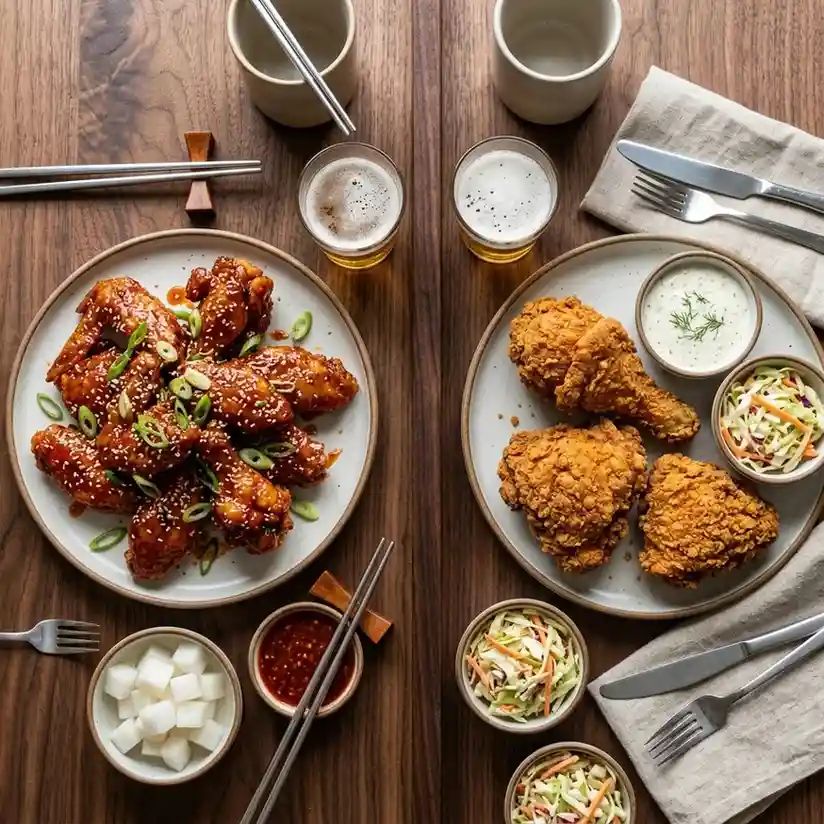
Cold carbonated beer contrasts with the hot sticky sauce in a specific way. The carbonation cuts through the richness and the cold temperature resets your palate between bites. It works the same way pickled radish (called “chicken-mu”) works as a garnish on the side of your plate. The cool, lightly sour cubes reset your palate so each piece of chicken tastes as sharp and vivid as the first one. It is a functional flavor contrast, not just garnish.
Chimaek is typically a social eating format. Shared plates, late nights, either at a Korean fried chicken restaurant or ordered for delivery. It has become deeply embedded in South Korean food culture.
Finding the Best Korean Fried Chicken Near You
Searching Korean fried chicken near me is the right starting move. But knowing what to look for once you get there matters more than the search result itself.
Major Chains Compared
| Chain | Signature Style | Sauce Approach | Best Known For |
|---|---|---|---|
| Bonchon | Soy garlic, yangnyeom | Hand-brushed per piece | Even crust-to-sauce ratio |
| bb.q Chicken | Light, delicate | Lower temp, longer fry | Lighter texture, wider menu |
| Kyochon | Soy-forward, less sweet | Cleaner glaze | Leaner flavor profile |
| CM Korean Fried Chicken | Various | House sauce options | Regional favorite |
| Den Den Korean Fried Chicken | Classic styles | Fresh-to-order | Independent quality |
| Donkey Mo’s Korean Fried Chicken | Fusion styles | Bold glazes | Casual setting |
| Boongs Korean Fried Chicken | Traditional and fusion | Crowd-pleasing sauces | Community favorite |
| Kkokio Korean Fried Chicken Asian Fusion | Fusion menu | Mixed Asian influences | Unique crossover menu |
| Mukja Korean Fried Chicken | Traditional Korean | Authentic recipes | Neighborhood staple |
| Oppa Korean Fried Chicken | Classic menu | Standard sauces | Easy access spot |
| Chingu Korean Fried Chicken | Traditional | Korean-style menu | Korean community favorite |
| Decibel Korean Fried Chicken | Bar and chicken combo | Curated sauces | Late-night dining |
| Don Chicken Korean Fried Chicken | Traditional styles | Various glazes | Wide menu options |
Bonchon applies its sauce by hand-brushing each individual piece rather than batch-tossing. That produces a more controlled crust-to-sauce ratio and less sogginess. bb.q Chicken runs lower frying temperatures over longer periods to produce a lighter, more delicate result. Kyochon keeps its flavor profile leaner and more soy-forward, pulling back on the sweetness that defines most yangnyeom versions.
Some locations offer a Korean fried chicken burger on their menu, which takes the double-fried patty format and adds the same sauces in a sandwich build. Worth trying if you see it.
Some Korean fried chicken restaurants also carry halal-certified options. If Korean fried chicken halal certification matters to you, call ahead or check the restaurant listing before you visit. Availability varies significantly by location and chain.
You can also find Korean fried chicken at the Cheesecake Factory in select locations, where it appears as a menu item with its own take on the sweet spicy flavor profile. The Cheesecake Factory Korean fried chicken is a good entry point if you are not near a dedicated Korean fried chicken restaurant.
Signs of a Well-Made Piece
Pick up a piece and check whether it holds its shape. Quality Korean fried chicken does not flex or bend. The meat should pull away from the bone cleanly when you bite through it. Good sauce is glossy and stays on the crust rather than collecting at the bottom of the container. Every bite should still carry moisture inside.
Independent spots in Korean neighborhoods or food courts with a short, focused menu are usually your best find. Long menus often mean less fresh frying. Signage partially or entirely in Korean is a good sign. A wait longer than 20 minutes on weekday evenings usually means each fresh order is made to order rather than held under a lamp.
Use Google Maps or Yelp and filter reviews for words like “fresh,” “crispy,” and “crunchy.” Overall rating scores tell you less than specific language about crust quality and sauce application.
For more flavor deep-dives across global dishes, visit www.flavorsuggest.co. The team publishes detailed flavor guides that go beyond the surface on dishes like this one.
Frequently Asked Questions
What is Korean fried chicken?
Korean fried chicken is a South Korean style of fried food made with a thin potato starch or rice flour coating, fried twice for an ultra-crispy crust and finished with bold sauces like yangnyeom or soy garlic. The double-frying technique and sauce-forward flavor philosophy set it apart from Western styles.
What makes Korean fried chicken so crispy?
Two things work together. Potato starch batter creates a thinner, more rigid crust than wheat flour. The double-fry method, first at 325 degrees and then at 375 degrees, removes surface moisture and locks the crust into a glass-like snap that holds even under sauce.
What sauce does Korean fried chicken use?
The most common is yangnyeom, a sweet spicy glaze built from gochujang, ketchup, honey, soy sauce, garlic and sesame oil. Other popular options include soy garlic (savory, no heat), dakgangjeong (tangy, sharper heat), honey butter (sweet, mild) and plain with a dipping sauce on the side.
What is the Korean fried chicken name for sweet and spicy style?
The Korean fried chicken name for the sweet and spicy version is yangnyeom chicken. The full dish is sometimes written as yangnyeom chikin in Korean.
How is Korean fried chicken different from American fried chicken?
Korean uses thin potato starch batter and a double-fry method. Americans use thick wheat flour batter and typically a single fry. Korean chicken gets its flavor from the sauce applied after frying. American chicken gets its flavor from seasoning built into the batter itself.
Why is Korean fried chicken served with pickled radish?
Pickled radish, called chicken-mu in Korean, works against the richness and heat of the chicken. Each cool, lightly sour cube gives your palate a reset so the flavor stays vivid throughout the meal.
What is chimaek?
Chimaek combines Korean fried chicken (chikin) with cold beer (maekju) into one cultural ritual. The format is social by nature, shared late at night either at the restaurant or ordered straight to your door. The cold carbonation from beer contrasts the heat of the sauce and clears your palate between bites.
Where did Korean fried chicken originate?
The origin of Korean fried chicken is rooted in South Korea during the 1970s and 1980s. American fast food culture influenced Korean cooks, who adapted and rebuilt the concept using local ingredients like gochujang, sesame oil and fermented pastes. Modern Korean fried chicken culture fully developed through the 1990s and 2000s.
References
- USDA Food Safety and Inspection Service (FSIS). “Safe Minimum Internal Temperature Chart.” United States Department of Agriculture. https://www.fsis.usda.gov
- Centers for Disease Control and Prevention (CDC). “Food Safety.” https://www.cdc.gov/foodsafety
- FlavorSuggest Editorial Team. Korean Fried Chicken Flavor Research. FlavorSuggest, 2026. www.flavorsuggest.co
- Korea Tourism Organization. “Chimaek: The Perfect Korean Food Pairing.” Official Korea Tourism Resources.
- Pettid, Michael J. “Korean Cuisine: An Illustrated History.” Reaktion Books, 2008.